

 Analysis by Gamescozy
When I play Fortnite on a phone, I notice two things at once: it can be a lively place to meet friends, and it can demand far more attention than a quick mobile game usually does. The bright, busy presentation makes the action easy to recognize, but a match also asks me to follow movement, sound, the play area, and other players at the same time. That mix is central to deciding whether Fortnite fits your needs. It is a free action game from Epic Games, Inc, with battle royale matches alongside other kinds of play. I would recommend it to someone who enjoys learning a demanding game with friends; I would hesitate if you need quiet, low-pressure play or struggle with fast, crowded screens.
Finding your way through a busy game
The game’s central idea is easy to grasp: enter a match, make decisions as events unfold, and try to outlast or outplay opponents. What takes longer is learning how its different activities fit together. Fortnite is not just one fixed routine, so a new player may need time to work out which mode suits them and where to go next. I find that variety appealing once I know what I want, but it can make the first visit feel less direct than a game built around a single mode.
The interface has to serve both combat and social play, and that creates a lot to take in. During a match, attention naturally shifts between the action and the information needed to make the next decision. On a small display, that competition for attention matters: even familiar elements can be harder to scan when the scene is moving. I suggest spending a calm moment exploring the menus before joining friends, rather than trying to understand every option while a group is waiting.
Fortnite has an average rating of 4.6 from around 529,000 ratings, and it has passed 10 million installs. Those figures suggest a large audience, but they do not tell me whether a particular player will find its presentation comfortable. My practical advice is to judge the game by a short, low-stakes session, not by its popularity. If the menu flow feels tiring before you even reach a match, that friction is worth taking seriously.
One useful habit is to treat a session as having a purpose. If I have only a little time, I decide beforehand whether I want a match, a social visit, or a chance to explore another activity. That prevents the abundance of choices from turning into aimless menu browsing. It is a small adjustment, but it makes the game feel more manageable, especially when I am playing on a phone rather than settling in for a longer session.
Reading the action and managing attention
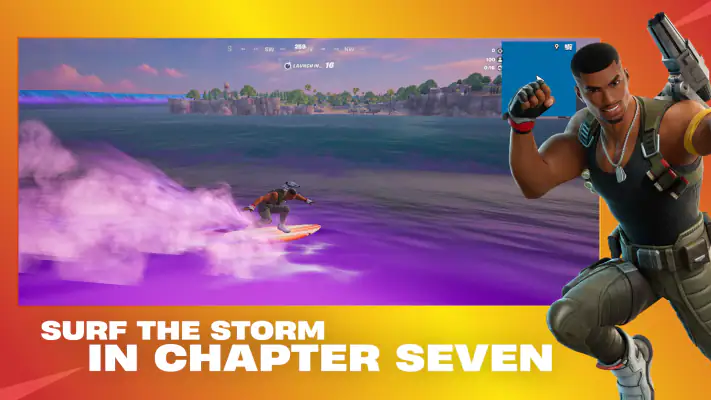
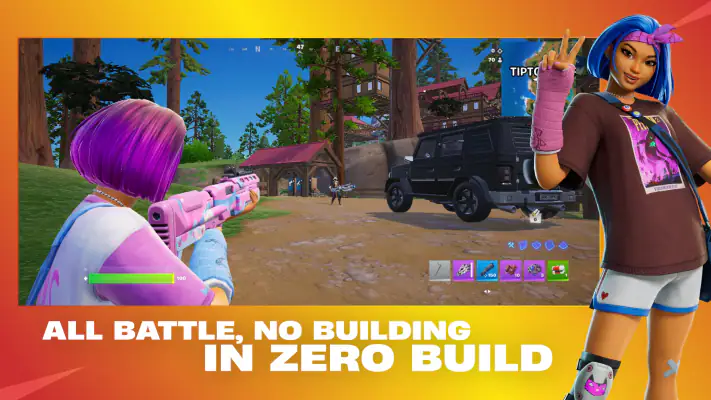
Visual clarity in a fast action game is not simply a matter of large text. I need to notice opponents, interpret the changing scene, and keep track of what is happening around my character. Fortnite’s vivid look gives the world a distinct personality, yet busy action can still be demanding for anyone who finds rapid visual changes uncomfortable. I would not assume that a colorful style automatically makes every important detail easy to follow.
Sound also contributes to awareness, but relying on it can be difficult in noisy surroundings or for players who cannot comfortably use audio cues. Playing with the sound low may make a match more comfortable in public or at home, though it can also mean missing some of the atmosphere and information conveyed through audio. This is a genuine trade-off rather than a reason to avoid the game outright: the best choice depends on how much you rely on sound to stay oriented.
I recommend checking the game’s available settings and trying them in a quiet, unhurried session. I would avoid promising that a particular control or display option will solve every access need; comfort depends on the player and device. Instead, notice which parts cause strain: reading the screen, tracking motion, hearing what matters, or making decisions quickly. Identifying the specific problem makes it easier to decide whether adjusting your setup is enough or whether another game would be a better fit.
Touch controls, pace, and sensory load
On a touchscreen, the challenge is not only choosing an action but doing so while the scene is moving. A player who is used to controller or keyboard input may need time to build comfortable habits on a phone. I would give myself a few practice sessions before judging performance, and avoid measuring success only by wins. Learning where to look and when to act is part of the adjustment.
That same pace can be hard for people with limited dexterity, hand fatigue, or difficulty making quick, precise movements. A long session may make the physical side more noticeable, especially if holding the device in one position is uncomfortable. Taking breaks and choosing a shorter session are sensible ways to reduce strain, but they do not remove the underlying demand for timely input. If you need a game that can be played entirely at your own pace, Fortnite may not be the right choice.
The sensory experience can also become intense when bright effects, motion, sound, and social activity arrive together. I would be cautious about recommending it as background entertainment or as a way to unwind after a tiring day. For me, it works better when I am ready to focus. A quieter activity within the game may feel less pressured than a competitive match, but the overall environment can still be stimulating, so it is sensible to stop if the session becomes uncomfortable.
Choosing the right place and moment to play
Fortnite is easiest to enjoy when I have a stable place to sit, enough time to complete an activity, and a connection that makes online play practical. A short break can be enough to check in with friends, but a match that requires attention is not ideal when I may have to put the phone away at any moment. It is also a poor choice while walking, travelling in a situation that makes screen use unsafe, or sharing attention with someone who needs me.
A realistic use case is arranging a relaxed evening session with friends. I can agree on when to join, decide what kind of play we want, and give myself time to learn rather than expecting every match to go smoothly. That social context is one of the game’s strongest advantages: friends can make the learning curve feel less solitary. It is less suitable if the group’s pace is much faster than yours or if you feel pressured to keep playing after you have had enough.
For a new player, I would make the first session deliberately simple: explore the menus, choose an activity with friends if that feels comfortable, and treat the result as practice. If you are playing alone, set a time limit before starting. The game’s variety can encourage “one more” activity, and a clear stopping point is helpful when you have work, study, sleep, or other plans to protect.
It is also worth considering the device itself. Fortnite requires Android 8.0 or later, and the current Android version is 42.40.0-59343437-Android. The game is free to start, with in-app purchases ranging from $0.99 to $89.99 per item. I would discuss purchases with a parent or guardian if a teenager is playing, and decide on spending boundaries before browsing. That is a practical precaution for any game with optional purchases, not a reason to assume that spending is necessary to enjoy a session.
Where the welcome ends and barriers remain
The game’s range of activities gives players more than one reason to enter, which can help a group with different preferences find a shared starting point. But variety should not be mistaken for equal ease of access. Fast combat still favors people who can track a changing scene and respond quickly, while a phone’s limited space can make simultaneous awareness harder. A friend’s help can make the first steps less confusing, but it cannot fully substitute for controls or pacing that match an individual’s needs.
Compared with a more traditional, single-purpose action game, Fortnite’s broader social and activity mix gives me more ways to spend time with friends. The trade-off is added complexity: there is more to navigate, and the experience can shift between relaxed social moments and demanding competition. If you mainly want a straightforward action game with fewer choices to learn, a simpler alternative may be kinder. If your priority is playing with a particular group, Fortnite’s breadth may matter more than that simplicity.
The Teen content rating is another useful part of deciding who should play. I would not treat an age label as a substitute for checking whether the game’s competitive tone, social setting, and spending options suit a particular household. For younger players, I would suggest talking through playtime and purchases in advance. For adults who prefer solitary, quiet experiences, the social energy may be a drawback rather than a benefit.
Fortnite has been available since April 20, 2020, and its developer is Epic Games, Inc. Its established presence does not mean every session will feel welcoming to a newcomer. I would approach it as a game that rewards patience: learn the layout, try activities at your own pace, and leave when the sensory or physical demands stop being fun. That approach is more useful than assuming that a popular game must work for everyone.
My inclusive verdict
I see Fortnite as a strong option for players who want social action, enjoy adapting to a busy screen, and are comfortable learning through practice. It is especially appealing when friends can make the experience collaborative rather than a test of immediate skill. Its free entry point makes it easy to try, though optional purchases deserve a little planning, and the Teen rating is worth keeping in mind when choosing it for a younger player.
For accessibility, my honest conclusion is mixed. The variety and social side can offer different ways to participate, but the speed, visual activity, touch demands, and sensory intensity remain meaningful barriers for some people. I would not recommend it as a low-stimulation or low-effort choice. If you are unsure, try a short session in a comfortable setting and pay attention to whether you can follow the action without strain. If you can, the game may become a lively place to play with friends; if you cannot, choosing a slower or more focused alternative is a perfectly good decision.
My bottom line: Fortnite is worth trying if shared play and energetic action are what you want, but its flexibility does not erase the demands of its core experience. Give yourself room to learn, set sensible limits, and choose the way of playing that feels comfortable rather than forcing yourself to keep up.